Download Targa informativa Misura 311 azione 1 – Agriturismi
Download Targa informativa Misura 312 azione 1 – Artigianato tipico
Download Targa informativa Misura 313 azione 5 – Affittacamere/casa vacanze
Ciao ciaoInvalid download ID.
Il partenariato del Gruppo di Azione Locale (GAL) Terra dei Messapi
Uno degli elementi strategici del Gal Terra dei Messapi è la sua compagine societaria composta da un partenariato misto PUBBLICO – PRIVATO espressione delle caratteristiche e delle peculiarità del territorio Leader compreso nei comuni di Cellino San Marco, Francavilla Fontana, Latiano, Mesagne, San Donaci, San Pancrazio Salentino, San Pietro Vernotico e Torchiarolo e che rappresenta in qualche modo tutti i settori economici (Agricoltura, Commercio, Artigianato, Turismo, Industrie Agro-alimentari), oltre che gli enti Pubblici che hanno creduto fortemente nel progetto di promozione e sviluppo del territorio di cui il Gal Terra dei Messapi si è fatto portavoce con il Programma di Sviluppo Locale 2007/2013.
Surrounded by centuries-old olive trees and vineyards, the old Farm Piutri is extended 14 hectares. Encircled in all its sides by dry stone walls, typical of the Salento rural landscape and culture, it seems like a fortress for its favored position near the Adriatic Sea and the famous archeological site of Valesio.
Its position offers a suggestive landscape, among vineyards, olive-trees, figs, cherry-trees and almond trees. In the farm there are also some courtyard animals. The didactical farm Piutri offers guided tours and tasting-didactical labs to rediscover the quality of their typical products, for a contact with nature and the rural environment. Realizing an authentic tasting lab where there is the farming production means to know and to contribute to safeguard and give value to the food patrimony as a completing part of the storical-cultural identity.
In fact, children and teenagers often ignore the rural production system which connects food to the land and to the work necessary for the production. The quantitative and qualitative problems linked to the production chains and to the freshness of the biological products, of the animals and plants life and biodiversity. In this sense, Farm Piutri is an important resource for schools because it promotes the culture of food genuiness and the cunsomer’s defense, the logical connection among food quality, health and care for the territory.
The visit to the farm is an occasion to have a direct contact with nature and the rural environment, an opportunity to visit some peculiar historical ways of this land, the possibility to experiment labs for students from the nursery
| Visita anche le pagine social: |
La Masseria La Vecchia Lamia è una azienda agricola caratterizzata da un uliveto secolare all’interno del quale si ergono delle vecchie “lamie” e due “casedde”, tipiche costruzioni in pietra del mediterraneo. Le costruzioni risalenti alla fine del ‘700, sono state completamente ristrutturate per renderle idonee alla ricettività in campagna e all’esercizio dell’attività di masseria didattica.
Fra le produzioni di punta, vi sono l’olio extra vergine di oliva, le conserve e liquori realizzati con alloro, limone, mirto, noci e tanti altri prodotti della masseria. L’azienda è dotata inoltre di due sale molto grandi e luminose, con due imponenti volte a botte in tufo calcareo e grandi vetrate che permetteranno di cenare sotto le stelle di sera o di ammirare il paesaggio di giorno. Uno scenario da “mille e una notte” dove poter celebrare i giorni speciali con piccoli e grandi ricevimenti, cenare o pranzare con piatti sempre diversi e gustosi con i prodotti della tradizione locale.
L’esterno presenta una spaziosa veranda in legno e un solarium, un immenso giardino tutto da vivere tra ulivi secolari, balle di fieno, piante mediterranee, fichi d’india e molto altro dove i ragazzi di tutte le età saranno accompagnati nei laboratori didattici per vedere da vicino i processi che si svolgono nel corso dell’anno in azienda, sperimentando, partecipando, ascoltando e degustando.
Coordinate GPS:
lat. 40° 40 0,68 N
lon.17° 26 58,29 E
| Visita anche le pagine social: |
The vine plantation, that of the olive-trees and some other local varieties of the Mediterranean scrub are a treasure for the Apulian land. Not just for its genuine products, but most of all for what the link to this land can teach. As the passion for the rural world, the amazement for the good and beautiful things, the welcome culture. Born from the mastery of the vine plantation of the great-grand-father Domenico Melillo, today the three brothers Giampiero, Maurizio and Rosa relaunch the family company with passion. Their mission is to produce high quality wine from their vineyards, placed in the rich and sunny land of the Alto Salento. Paying attention to the value and the safeguard of the local wine tradition, they use the most innovative wine knowledges and tools. They chose to realize the weeding just in a mechanical way and not by means of synthesis products. In this way they can produce good and clean kinds of wine, with the aim of exalting the drinking ability and having more ambitious labels.
They produce oil, honey, fruit and vegetable. Each production process is based on the biodiversity safeguard and the environmental sustainability. As a didactical farm approved by the Apulia Region, they organize projects and educational activities for adults and children but also lessons of the typical Apulian cooking with the aim of combining healthy food and aware nutrition and the taste of the old traditions.
Coordinates GPS:
40°33’15.5”N
17°30’30.5”E
| Visit social page : |

The didactical Farm Triticum has been recognized as suitable by the Apulian Region, after accurate evaluations, and it has been included in the Didactical Farms Register, recognized by the Apulian Region. As a didactical farm every year there are some seasonable labs, addressed to all kinds of schools. They deal with themes such as the food and environmental education. In the taste labs, they move from the traditional food education to the taste education: leaving ethic and bans apart – this is healthy, that is unhealthy – you can activate your five senses. Thanks to the raw materials handling, students will be curious, and they will overcome some prejudices which are the base of the food refusal.
In the environmental education labs they try to improve the ecological awareness.
Coordinates GPS:
40.5708
17.5843
| Visit social page : |
Just outside the town of San Pancrazio Salentino, on the provincial road to Avetrana, there is the wonderful land-tourist resort “Torrevecchia”, the destination of so many tourist who, especially during the warm seasons, do not give up enjoy real moments of relax in the greenness surrounding the structure. Zootechnical farm is 200 hectares large. The most important activity of the farm is made by bovine, goat breeding and and courtyard animals. Fresh milk is used for dairy production of “ricotta, mozzarella, cacio ricotta, pampanella, caciocavallo, ecc”.
The lodgings, refined and provided with all comforts, are inside the ancient farm of 1300, restored with a great care. The typical coking from Apulia, made with biological products grown in the farm, make it a unique place where it’s possible to relax and unwind. The free time can be nicely spent in many ways: agricultural activities, swimming pool, tennis courts and bowling fields or long walks on foot, riding a bike, on horseback or by buggy that give the possibility to cross the country full of scents and joy. Moreover, we find inside a crypt of the VII century with Byzantine frescos.
Coordinates GPS:
N 40° 41’069’’
E 17° 81’340’’
| Visit Social Pages: |
Born to preserve the ancient family tradition, Marangiosa zootechnical farm is 95 hectares large. The most important activity of the farm is made by bovine and goat breeding. Fresh milk is used for dairy production of “ricotta, mozzarella, cacio ricotta, pampanella, caciocavallo, ecc”. All dairy products have particular tastes and flavours of the past associating traditional methods and modern technologies. Marangiosa farm is a didactical farm too.
Coordinates GPS:
40°35’58’’N
17°41’2’’E
| Visit Social Pages |
asdsadsadsa

TUR.PUGLIA – “PROMUOVERE IL SISTEMA TURISTICO LOCALE SOSTENIBILE PUGLIESE”
TUR Puglia è un progetto che coinvolge 8 GAL pugliesi ed è finanziato con fondi del PSR Puglia 2007/2013 – asse IV – Misura 421.
L’obiettivo prioritario di TUR Puglia è creare dei sistemi turistici locali sostenibili che valorizzino e promuovano in maniera integrata le culture e le eccellenze del territorio rurale. TUR Puglia punta al superamento del concetto di Comunità locale circoscritta, andando a definire una Rete dei Sistemi Turistici Locali Sostenibili, integrando cultura ed eccellenze territoriali e rendendo più interessante l’offerta turistica dei territori.
Infatti, dal punto di vista strategico si punta alla “realizzazione di un sistema di sviluppo rurale che sia integrato e basato sulle risorse locali, in grado di valorizzare le potenzialità produttive, agricole, naturali e culturali endogene; grazie al consolidamento dell’imprenditorialità esistente, alla crescita della cultura locale e alla partecipazione ai processi decisionali e aggregativi”. Particolare rilevanza viene attribuita alla tradizione artigiana di ogni singolo GAL/STL sulla base della quale si costruiranno dei LABORATORI POLICENTRICI che rappresenteranno l’attrattore principale dei Sistemi Turistici Locali (STL) di tutti i GAL partner.
L’output finale consiste nella definizione e costruzione di un unico sistema turistico sostenibile Pugliese che nel tempo sia in grado di auto-sostenersi e auto-alimentarsi, generando attrattività nei confronti dei potenziali visitatori, nella consapevolezza di trovarsi inseriti in una rete di offerta turistica integrata.
Infine, dal punto di vista dei risultati attesi, si punta ad implementare un’offerta turistica rurale efficiente, in grado di rendere il turismo maggiormente sostenibile dal punto di vista ambientale, economico e culturale.
Partner di progetto: GAL Terra D’Otranto (capofila), GAL Luoghi del Mito, GAL Terre del Primitivo, GAL Alto Salento, GAL Terra dei Messapi, GAL Valle Della Cupa, GAL Gargano, GAL Conca Barese
OUTPUT PRODOTTI
Partecipazione ad eventi promozionali mirati: ITB di Berlino (5-8 marzo 2015)

- ITB BERLIN

- Cosimo Giuliano – Scultore

- Lavorazioni in ceramica di Maria Iris

- Lavorazioni in cartapesta

- Lavorazione cesti

- Piero Balsamo, cartapestio e cultore delle tradizioni locali

- Opera dello scultore Cosimo Giuliano

- I GAL Terra dei Messapi e Alto Salento impegnati nella promozione e valorizzazione dell’eccellenza dell’artigianato tradizionale locale

LEADERMED
La Dieta Mediterranea è stata riconosciuta come Patrimonio culturale Immateriale dell’Umanità dall’UNESCO nel 2010, come modello di sviluppo basato sui valori di questo tipo di alimentazione e stile di vita dal punto di vista culturale, sociale, storico, gastronomico, alimentare, ambientale, paesaggistico e dei costumi.
Il progetto intende identificare e valorizzare il prezioso patrimonio di risorse (agricole e agro-alimentari, culturali, turistiche, naturalistiche, paesaggistiche, etc.) delle culture locali delle aree rurali connesse alla Dieta mediterranea al fine di poter sviluppare la loro conoscenza.
La Dieta Mediterranea va considerata un motore per cambiare, in un’ottica di sostenibilità, le traiettorie dello sviluppo umano ed economico nei paesi dell’Area. Per l’UNESCO il termine “Dieta” si riferisce all’etimo greco “stile di vita”, cioè all’insieme delle pratiche, delle rappresentazioni, delle espressioni, delle conoscenze, delle abilità, dei saperi e degli spazi culturali che le popolazioni del Mediterraneo hanno creato e ricreato nel corso dei secoli.
Il progetto vuole rafforzare il processo di identità della popolazione locale con il territorio di appartenenza – anche contribuendo a contrastare il fenomeno di spopolamento delle aree rurali – e, quindi, concorrere a migliorare le condizioni di vita delle comunità rurali.
Partner di progetto: GAL Alto Salento, GAL Sud Est Barese, GAL Valle d’itria, GAL Terra dei Messapi, GAL Luoghi del mito, GAL Terre del primitivo, GAL Colline Ioniche, GAL Valle della cupa, GAL Terra d’Otranto, GAL Terra d’Arneo, GAL Serre Salentine, GAL Capo Santa Maria di leuca, GAL Meridaunia, GAL Daunofantino, GAL Città di Castel del monte, GAL Conca barese, LAG Via Appia Byblos, Cairo University – Faculty of Agriculture Center For Rural Development Researches And Studies University – Faculty Of Agriculture Center For Rural Development Researches And Studies, Teuleda Local Economic Development Agency- Shkoder, The Heraklion Development Agengy Ddr Ota, Loyalty To Land Association.

Guarda il Trailer prodotto dal registra Luigi Piepoli “La strada dei saggi”

Il progetto di cooperazione transnazionale “Rete di Itinerari enogastronomici transnazionali” proposto dal GAL Luoghi del Mito (ente capofila) è l’evoluzione del progetto attuato nell’ambito del Leader +2000-2006, in partenariato con il GAL Alto Salento, Terre del Primitivo e LAG Sjuhǟrad (SE) e denominato “La rete internazionale degli show room nelle aree rurali”. Rispetto al progetto originario, i partner hanno inteso rafforzare la cooperazione, coinvolgendo altri GAL della Regione Puglia, del Regno Unito, della Danimarca e di Malta e finalizzando le azioni progettuali verso una nuova strategia di promozione più ampia, con la valorizzazione della cultura della dieta mediterranea. TEINET, coerente con la programmazione dei territori coinvolti, raccogli i frutti delle azioni 1, 2, 3 della misura 313 attraverso la quale i GAL hanno realizzato nei rispettivi territori itinerari e percorsi come strade del vino e dei prodotti tipici, case del gusto e delle tradizioni, della transumanza. Partorito nell’ambito della misura 421 dell’Asse III del PSR Puglia, TEINET intende introdurre servizi innovativi e promuovere sistemi di rete a supporto del turismo nelle aree rurali. Il progetto si propone di creare e promuovere un’offerta turistica rurale basata sulla valorizzazione integrata di percorsi enogastronomici a carattere internazionale. I percorsi proposti sono collegati fra di loro in modo da costruire una rete transnazionale degli itinerari enogastronomici. Filo conduttore di questi itinerari ed elemento tematico comune è il modello alimentare locale e la cultura del territorio su cui tale rete ricade. L’obiettivo generale del progetto di cooperazione transnazionale TEI.net è quello di promuovere itinerari enogastronomici ed i prodotti ad essi collegati (per i GAL pugliesi anche attraverso il marchio “Prodotti di Puglia”), riconoscendone il fondamentale ruolo della tradizione agricola, alimentare e culturale: divulgare la cultura enogastronomica nei paesi target prescelti, promuovere il territorio ed il paesaggio produttivo nel suo insieme (eccellenze produttive, storico, culturali, ambientali, ecc), diffondere la storia dell’eccellenze produttive, garantire il consumatore attraverso la valorizzazione delle denominazioni di origine, organizzare eventi attraverso l’attuazione di strategie comuni di comunicazione, marketing.
Partner di progetto: GAL Luoghi del mito, Gal Terre del primitivo, Gal Alto Salento, Gal Valle della Cupa, GAL Ponte Lama, GAL Terre di Murgia, Gal Andria – Corato; GAL Conca Barese, GAL Fior d’olivi, GAL Daunofantino, GAL Gargano, GAL Daunia Rurale, GAL Terra dei Messapi, GAL Terra d’Otranto
 |
Fiera internazionale L’ITALIE À TABLE (Nizza, dal 28-31 maggio 2015) |
Casa del gusto, centro per la conoscenza e la sperimentazione diretta del modello culturale alimentare locale, in cui si realizzeranno iniziative e spazi di apprendimento riservati a cittadini, turisti, scuole, gastronomi, dilettanti e cuochi.

Il progetto di cooperazione interterritoriale “Corto Circuito dei Contadini” intende promuovere i produttori locali e la vendita diretta a Km 0, tutelare i produttori ed i consumatori. Obiettivo è presentare al consumatore un prodotto che mantenga proprietà nutrizionali, di gusto, aspetto, consistenza, tipiche del prodotto appena raccolto.
Promuovere la Filiera corta puntando su prodotti freschi, oltre a dare un’indicazione positiva al consumatore per le loro specifiche qualità nutrizionali e organolettiche, offre l’opportunità di fare educazione alimentare: la stagionalità è infatti una delle indicazioni “chiave” delle linee guida per una sana alimentazione.
La Filiera corta si configura come una strategia alternativa che possa consentire agli agricoltori di riconquistare un ruolo attivo nel sistema agro-alimentare, con la collaborazione degli altri attori della filiera, di cui entrano a far parte, come soggetti attivi, anche i consumatori.
Fra le attività svolte i produttori hanno partecipato ad eventi di rilevanza nazionale presentando i loro prodotti.
Partner di progetto: GAL Terre di Murgia, GAL Sud Est Barese, GAL Conca Barese, GAL Ponte Lama, GAL Fior d’olivi, GAL DaunOfantino, GAL Gargano, GAL Daunia Rurale, GAL Terra dei Messapi, GAL Terra d’Otranto.
Scarica il materiale didattico realizzato per l’attuazione di azioni di sensibilizzazione rivolti a bambini e ragazzi in età scolastica:
| Il Fumetto – Il viaggio di Corto Ciruito
|
A Corto Circuito, il protagonista di questo fumetto, è stato affidato un’importate compito: impedire che la “Biofonte” si prosciughi. In sella alla sua bicicletta, questo ragazzino coraggioso si mette subito in azione. Un viaggio tra i sapori, la storia, le tradizioni e monumenti della nostra meravigliosa Puglia! |
| Slurp & Gnam: alla scoperta della Puglia
|
Da alcune delizie gastronomiche del territorio pugliese prendono “vita” e si animano i personaggi protagonisti del libro: il simpatico Slurp e il suo bizzarro amico Gnam guideranno i bambini alla scoperta della Puglia rurale. |
| Videogame (WIN/Mac) EcoWorriors
|
Un video gioco dai contenuti educativi nato con l’obiettivo di diffondere, con metodi accattivanti e moderni, tra le nuove generazioni, i concetti cardine dell’educazione alimentare e della tutela della biodiversità. Gli Ecowarriors tornano nelle campagne pugliesi per combattere i necrobot. Questa volta però la minaccia non è all’ambiente, ma alle prelibatezze, sane, gustose e a chilometro zero di questa regione ricca di tradizioni alimentari. |
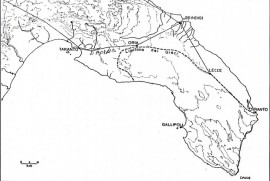
Limitone dei Greci, the boundary line between the Byzantines and the Longobards, is the name chosen to imagine the itinerary that includes, in a handful of kilometres, three municipalities of the Terra dei Messapi: Mesagne, San Donaci and San Pancrazio Salentino.
The itinerary, which crosses the imaginary boundary from which it takes its name, winds through vineyards, olive groves and stretches of wheat fields. The route starts from Mesagne, the Messapi town you can discover reading the “Cuore di Pietra” itinerary and heads south along a cycle route. At about one kilometre from the centre, take a small road on the right and at the next junction the road on the left. At the 4.9 kilometre junctionturn left again and, after about 500 meters you reach the SP 74 which joins Mesagne to San Pancrazio. Here, near the Masseria Muro Maurizio, evidence of a Messapi settlement has been found.
At San Donaci some farmhouses can still be seen: Masseria Monticello, Falco and Palazzo, some still in reasonable condition. When you enter San Donaci, allow yourselves to be guided by our sommeliers to discover the Controlled Origin (DOC) wines, appreciated all over the world such as the Salice Salentino, Squinzano and Brindisi, which colour the Mediterranean Diet with red. You will find many typical local restaurants …. we recommend some typical dishes “ciceri e tria”, a home-made pasta, half boiled and halffried, dressed with chickpeas. Try it and you won’t be sorry! Leaving the town, heading south, a dirt track leads to the
Li Paduli zone, an area reclaimed in 1922 rich from the ecological point of view, because it provides an ideal habitat for various species of birds during migration months. The route continues west towards the archaeological area of Li Castelli, at San Pancrazio Salentino which scholars indicate as a Messapi site, later colonised by the Romans and where it is possible to find another stopping point along the network of “Terra dei Messapi” itineraries.
Again to the west of the town of San Pancrazio, an isolated place of worship; the Grotta dell’Angelo; located within the Holiday/Teaching Farm of Torre Vecchia, where the visitor can find wine, oil, excellent goat’s cheeses, salamis, fruit preserves, meat and dairy products. At around 3.5 kilometres to the north-west of the town we come to the sanctuary of Sant’Antonio alla macchia, built over an ancient underground crypt.
Again near the Sanctuary, you will enjoy an uncontaminated natural landscape to be observed in relaxation at the stopping area belonging to the Network of Terra dei Messapi Itineraries.
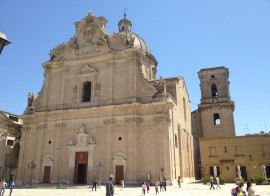
Art, history, tradition, faith and mystery. The Golden Curls itinerary will introduce the visitor to the historical and architectural Baroque beauties of the town of Francavilla Fontana and its excellent wine and food products.
Outside the town centre it is possible to admire stretches of olive groves, dry stone walls and ancient partially renovated farmhouses which today are used as holiday farms and teaching farmhouses. The journey in discovery of the historic centre starts from the sanctuary of Maria SS della Croce inside of which wooden decorations and some eighteenth century paintings can be appreciated, then going on to the centre of the town. Along the way we find the seventeenth century Porta del Carmine, built between 1630 and 1656 by the Imperiali. Then we move on to the castle of the Imperiali, half fortress half palazzo, commissioned by Giovanni Antonio Orsini del Balzo around 1450. Towards the historic centre, next to the Palazzo Imperiali, there is a small museum of farming civilisation, situated in an old building.
Further on we can see the Church of Santa Chiara with its fine floor covered with majolica tiles; in fact here the nine statues of the Mysteries (The Passion of Christ) in multi-coloured papier-maché made at the end of the eighteenth century are kept. The church, today in neoclassical style, was rebuilt in 1836 after a previous church (the convent of the Clarisses) dating back to the XVII century, was knocked down. On Good Friday, the solemn procession of the mysteries, one of the most important rites of Holy Week, starts from here. One after the other, the statues come out of the church accompanied by the various confraternities and cross-bearers (penitents of various extraction, that carry a very heavy wooden cross “lu trau” on their shoulders and create a long silent procession, rich in pathos, which winds through the various alleyways of the historic centre). And it is here, at Francavilla Fontana, that there are many papier maché workshops and confectionary artisans who produce curly sugar-coated almonds, the confectionary-symbol of the town, in a lumpy shape, from almonds, sugar, water and natural aromas.
We leave from Torchiarolo and Torre Bartoli, which together with Torre Lo Muccio, are a classic example of towering farmhouses. Continuing our route through the Torchiarolo countryside we easily reach the sanctuary of the Madonna di Galeano, located in the middle of large expanses of olive groves.
Following northwards, we pass Masseria Piutri, (one of the nine Teaching Farmhouses of the “Terra dei Messapi”) and Masseria Pisciani (the holiday farm furthest towards the east of the Terra dei Messapi). We close the tourist ring in the northern area of Torchiarolo, visiting Valesio, the archaeological park containing the remains of ancient Roman spas and town walls: Masseria Grande is located in the site which today houses one of the “Terra dei Messapi” Info Points.
We go one until we come to San Pietro Vernotico, the town of the great Domenico Modugno. Here the artisan workshops and oil and wine producers remind us of the colours and sounds that inspired Modugno.
Through the streets of San Pietro Vernotico we will certainly arrive at the very central Piazza del Popolo. In the same square just a short distance away we will find the Palazzo dell’orologio, the former Town Hall and today partially a “Terra dei Messapi” Info Point. Then we go on to the “Wine Town”: Cellino San Marco. The rural context in this area is characterised by extensive vineyards for the productio of wine. Following the SP51, towards the Estates of Albano Carrisi, we come to Curtipetrizzi Woods (Aurito
Woods). In recent years, Cellino has taken the name of “Città del vino” (the Wine Town) and is recognised as an ideal place for the wine tourist, who after a short visit of the town can taste typical dishes, in the local vineyards, and relax along wellness routes through the olive groves. The journey through the “Negroamaro Valley” continues towards the south-west as far as San Donaci. Here numerous wine producers will open to the public for guided visits and tastings. Among these is the Cantina Cooperativa of San Donaci, the oldest wine producers of the province of Brindisi, which boasts an excellent quality of production.
Continuing along the dirt track which cuts the wet area in two, we will cross a section of road shared by another tourist itinerary: “Il limitone dei Greci”. To continue to discover the territory and therefore the end of the “Messapi di Vino” itinerary, we refer you to the itinerary entitled
“Limitone dei Greci. But meanwhile, we can tell you that San Pancrazio Salentino, the last leg of this route through the art of wine-making of the Terra dei Messapi, is the nearest Municipality to the Ionian coast of all eight Municipalities of the Local Action Group (GAL) and has many points of considerable historicalarchaeological interest.
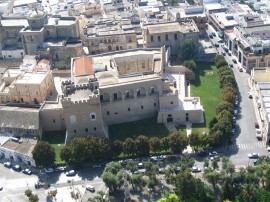
The historic centre of the Municipality of Mesagne has ancient origins and has been influenced by many cultures that have consolidated over the centuries.We are struck immediately by the Norman-Swabian Castle with its medieval architecture and the numerous Baroque churches. The urban itinerary allows us a complete visit of the historic centre of Mesagne, characterised by a particular “heart” shape and by a compact urban structure. We depart from the monumental sixteenth century Porta Grande, the main testimony of the ancient town walls, by which we enter the historic centre. We turn right into Via Castello, where we see the old sixteenth century buildings where today food and wine and cultural activities are held; reaching the entrance of the Norman-Swabian Castle, we visit the “Ugo Granafei Museum” with important medieval, Roman and Messapi finds. The route inside the Castle, the origins of which are thought to date back to the IX century, is an evocative journey through stories and legends. After visiting the castle, we go on towards the near-by sixteenth century Piazza Orsini del Balzo, dominated by the Palazzo Cavaliere and the church of Saint Anna, one of the finest and most harmonious Baroque churches of the Salento. Through a characteristic narrow passageway, we come to the archaeological site of Vico Quercia. Here important archaeological traces are testimony of the strong impression left by the Messapi.
Continuing on our way, we come to the Chiesa Matrice (Mother Church), in Baroque style and rich in valuable artistic elements. The church looks out onto piazza IV Novembre, in ancient times called Piazza Sedile or Piazza dei Nobili. On the opposite side of piazza del Sedile, we find the municipal library in the palazzo dell’Orologio dating back to 1867.
Near Piazza Sedile, in via Eugenio Santa Cesaria, we can visit the semi-underground oil-mill, proof of how important the production of oil was in the past. Today the oil-mill is an Info Point for the Terra dei Messapi designed as a hub in the network of itineraries where visitors can obtain information and knowledge about the rural culture of the territory. Instead, if we walk along the outer walls of the historic centre we soon come to the Municipal Theatre, restored and still open to the public. Just opposite the Theatre we find the monumental Porta Nuova.
Before crossing it to return to the historic centre, we can visit the near-by church of the Dominicans and, just after that, the little Byzantine Temple of Saint Lorenzo. The Town of Mesagne is also an ideal place for those in search of old flavours. The historic centre is full of eateries and restaurants that prepare traditional local, regional country dishes.
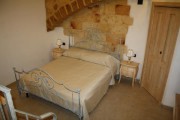
Il B&B Corte dei Florenzia (oppure pagina facebook) nasce dopo un’accurata ed attenta opera di recupero e di restauro al piano terra di un’antica Dimora Signorile. Nel cuore del centro storico, a pochi km dal mar Jonio e dal mare Adriatico, a ridosso della secentesca Chiesa Matrice, della bellissima Piazza Orsini del Balzo e dalla splendida cornice del Castello Normanno Svevo, la struttura si distingue per le particolari volte a botte e per i suoi archi in carparo portati a vista. Consta di 3 camere dotate di ogni confort e arredate finemente, per regalarvi un soggiorno indimenticabile. Tutte le camere sono dotate di bagno privato, climatizzatore, tv, wi-fi, minifrigo, cassaforte, radio ed ingresso privato nella propria stanza.
La struttura “Antico Attico Sant’Anna” è un B&B ubicato nel Comune di Mesagne, a pochi minuti dall’aeroporto di Brindisi, dal Mar Adriatico e dal Mar Ionio. Antico Attico Sant’Anna è nei pressi del Castello Normanno-Svevo e della bellissima chiesa Madre.
Nelle vicinanze ci sono bar, pub e ristoranti che offrono la possibilità di degustare la cucina tipica locale e non solo.
Con Antico Attico Sant’Anna è possibile richiedere anche l’auto di cortesia a soli 19,00 € al giorno.
Sempre su richiesta “servizio navetta” da/a stazione, porto o aeroporto.
Contatta la struttura e visita i suoi canali
| Telefono | 335/5617345 |
| E. Mail | |
| Sito | |
| Pagina social |
The small village of San Donaci is located in the centre of a very interesting area from the point of view of nature and history. One of the greatest surprises it reserves the visitor in an often arid land dominated by the sun like the Salento, is that of suddenly encountering a marsh. “Li paduli” a natural basin into which the waters of the surrounding territories flow, is an area of great value in terms of nature due to the presence of numerous species of migrating birds. Another characteristic place is the Tempietto di San Miserino considered to be the most ancient place of worship in the Paleo-Christian age in the whole of the Salento. The structure today is partly in ruins; however it still has its typical domed roof. With its interior around 2 meters below the level of the surrounding countryside, traces can still be seen of the red plaster and, unlike the Byzantine frescos that characterise the inside of the temple, today totally disappeared, small traces of a mosaic with dark tesseras decorating the floor can still be appreciated. A short distance away there are also signs of the so-called “Limitone dei Greci”; this is a communication road which also represented a fortified defence line of the Terra d’Otranto, which identified the boundary of the Byzantine territories to the south with those of the Normans to the north. The history of San Donaci has developed along this path. It is proved by discoveries and finds made to the South of this road and immediately to the North near San Miserino, among which we remember the discovery of a Roman villa in contrada Palazzo, a Roman necropolis and the discovery of five Latin epigraphs in contrada Nicola Turco; the chance discovery of a Roman villa and the finding of a Roman necropolis near Masseria Falco. Moving to the centre of San Donaci the most significant architectural structures historically speaking are: the Castle, or the bishops Palace, the Chiesa Madre di Santa Maria Assunta, a fine example of Neoclassical architecture. It was built in 1899 on top of a previous church showing an elegant and simple facade and is dominated on one side by the bell-tower, visible from every corner of the village, crowned by a small octagonal dome typical of local traditions. The little church of Santa Maria delle Grazie, on the other hand, contains a fresco dating back to the XV century depicting the Madonna col Bambino.
Typical products
DOP oil, DOC wines, baked products, home-made pasta such as li pizzarieddi and laiane (also called sagne ncannulate).
OIL, WINE – The economy of San Donaci is based mainly on oil and wine. All of the wine production of the area boasts excellent labels distributed all over Italy and exported to the rest of the world. One of the oldest wine-producers is the historical Cantina Cooperativa of San Donaci, founded in 1933, famous not only for its production but also for its characteristic underground wine-cellar.
BAKED PRODUCTS – Baked products include the very popular friseddhra (frisella). This is ring-shaped and made from barley and durum wheat flour, cut in half and baked in the oven until hard so that it is easy to carry about. It is soaked for a few seconds in water and then dressed with tomatoes, garlic, anchovies, salt, oregano and extra virgin olive oil.
Home-made pasta – Home-made pasta made from durum wheat flour, water and the work of expert hands lives again in many families who still follow this old tradition today. As well as orecchiette, we can still find pizzarieddi and laiane (also called sagne ncannulate) on the traditional wooden boards.
EVENTS
March The “Tavole di San Giuseppe” (19 March).
The “Tavole di San Giuseppe” huge tables laid in honour of the saint can be found on 19th March of every year in the homes of citizens devoted to the saint. The families lay long tables with various traditional dishes (lampascioni, turnips, fried fish, pittule, etc). In the evening on the 18th of March the devotees cover the tables, as though they were little altars, with the most beautiful embroidered table clothes, fresh and sweet-smelling flowers, candles, traditional dishes lined up according to a precise symbology following ancient rules
April Feast and Fair of Saint Vincenzo Ferrer.
May Open Wine Cellars – (Last Sunday of the month).
August Feast of the Patron Saint Maria delle Grazie (4-5 August). The feast of ancient flavours (6 August).


Stiamo aggiornando questa sezione. Ci scusiamo per la momentanea assenza di informazioni.
• L’ARANCETO
SAN DONACI (BR)
Via Tripoli, n°48
Cell: 339 4874093 Cell: 349 4211107
• DA PEPPINO
SAN DONACI (BR)
Via Pastrengo, n°23
• ANTICO MELOGRANO
SAN DONACI (BR)
Via Mesagne, n°29
• IL CENACOLO DEI TEMPLARI
SAN DONACI (BR)
Via Perrone, n°13
• AZIENDA AGRICOLA “ALBA NERA”
SAN DONACI (BR)
V. Verdi, n°49
Cell 347 2969783 Tel 0831 635497
Cell 347 2969783
fax: 0831 1880114
E-mail aziendaalbanera@gmail.com
• LABORATORIO MACI
SAN DONACI (BR)
Via San Pancrazio
Tel tel: 0832 704018
• CANDIDO FRANCESCO AZIENDA VITIVINICOLA (S.P.A.)
SAN DONACI (BR)
Via Armando Diaz, n°46
TEL 0831 635674
• AZIENDA AGRICOLA DEL PRETE DI DEL PRETE NATALINO
Via Piave 10 – 72025 San Donaci (BR)
0831 635862
• AZIENDA AGRICOLA DI SCRETI ANDREA E C.
via Galileo Ferraris 27 – 72025 San Donaci (BR)
• AZIENDA AGRICOLA LOLLI POMPILIO
Corte Torquato Tasso 3 – 72025 San Donaci (BR)
Tel 0831 635651
• AZIENDA AGRICOLA DEL DOTT. PAOLO TAURINO
Strada Statale Per Lecce (San Donaci / Salice) San Donaci
Cell 33399339
• AZIENDA AGRICOLA ISOLA VERDE SOCIETA’ SEMPLICE AGRICOLA
Via Tunisi 54 – 72025 San Donaci (BR)
• LOLLI AZIENDA AGRICOLA VITIVINICOLA DI LOLLI VINCENZO
Via Silvio Pellico 8 – 72025 San Donaci (BR)
in costruzione
Torchiarolo, the southernmost town in the province of Brindisi has antique origins dating back to the Messapic period. Proof of this is given by the nearby ruins of the ancient city of Valesio, today an archaeological site of considerable historical importance. The first traces of the settlement date back to the Iron Age as far as the Late Middle Ages. Some of the jewels of this site are the circuit of the walls with the seven access doors, dating back to the IV century, arranged in the form of an irregular ellipse, and with a thickness of more than 5 meters the best preserved features of which are visible località Campisani, località Masseria Piccola and Masseria Grande. Not to be missed is the spa complex from the late Roman period where remains of great historical value and the pajara have been found. In the municipality of Torchiarolo however everything is concentrated into the very central “piazza Castello”: on one hand we have the Chiesa Madre named after Maria SS. Assunta, built at the end of the XVI century on top of a pre-existing building; at the centre of the square we find the Chiesa del Rosario, which contains an interesting painting of Saint Joseph dating back to 1715; while, on the opposite side we can see the Palazzo Baronale built in 1698, with a square tower and coping, it is the only testimony of the ancient defence system. Finally, also near the main square we find Palazzo Tarantini, interesting above all for its arched entrance with fortified tower. Leaving the centre, among the numerous rural chapels spread over the countryside we can admire the fine little church of the Madonna dei Galeano, built over a seventeenth century chapel, is home to an ancient fresco of the Madonna col Bambino and the chapel of the Madonna delle Grazie with its altar depicting Christ Pantocrator. The Torre Bartoli and the Torre Lo Muccio are also characteristic, built in the countryside around the town as outlook posts for enemies coming from the sea. In fact, Torchiarolo was one of the local towns most exposed to the raids of the Turks with whom the inhabitants engaged in ferocious battles. In fact the etymology of the name Torchiarolo seems to suggest that it comes from the term “turce”, used in the registers of the time to indicate a violent and barbarous killing. Moving towards the marine area we find an important nature oasis called Quatina, composed of a marsh under the sea and the dune of Lido Presepe.
Typical products
DOP extra virgin olive oil, DOC wine, bread.
Monumental olive trees and evo oil – The legend has it that the name of the Municipality derives from “torchio d’oro” (golden olive press), referring to olive pressing. One thing is certain: Torchiarolo is synonymous with olive groves and thanks to the work of man the authentic Extra Virgin Olive Oil is obtained, an oil with a clean, pure taste, the main element of the Mediterranean Diet. Oil is also the protagonist of the delicious vegetable preserves, which are produced as soon as the ingredients are picked; exquisite to eat, for example, with bread still hot out of the oven.
The bread of Torchiarolo – It has a golden crust without cracks, the crumb is deep and compact. It is obtained by working flour with water, allowing it to rise with a “mother” yeast and cooking it in wood-burning ovens. Excellent to eat dressed with some oil and tomato.
EVENTS
April Fair of Maria Santissima di Galeano – (from Easter Saturday to the following Tuesday). The Sanctuary of Torchiarolo is dedicated to the Madonna of Galliano or Galeano and was rebuilt where once a little VII or IX century church was located housing the medieval fresco of the Madonna and a part of the apse of the original temple.
June Feast of Sant’Antonio da Padova – (during the month).
October Feast of the patron saint of the Santissimo Crocifisso – (during the month).
December Living Nativity.


Pio Tarantini [Torchiarolo 1950] is a photographer and italian teacher. Expert of photos, he is interested in the social and geomorphological shades of the territory. Among his first works, a social white and black photo report in 1972 which depicts his land and the prevalent decline aspects of the south of those years.
Crocefisso Maggio [Torchiarolo, 2nd May 1962] pool world champion, in the “Italian 5 skittles” specialty. His talent and his great creative abilities, make him the only one in this sport
• MASSERIA PISCIANI
TORCHIAROLO (BR)
Contrada Pisciani
Tel 0831 620747 / 0831 620596
Fax: +39 0831 623907
Email: info@masseriapisciani.it
• B&B LU SULE
TORCHIAROLO (BR)
Via Brindisi
Cell 338 5214426
Cell 333 7957235
www.beblusule.it
• B&B ARCOBALENTO
TORCHIAROLO (BR)
Via del Salmone, n°3 Località Lindinuso
Cell 328 7610362
www.arcobalento.it
• B&B VILLA ROSARIA
TORCHIAROLO (BR)
Via Roma
Cell 328 6127679
• RISTORANTE ZONA FAO 37
TORCHIAROLO (BR)
Via Umberto, n°58
Cell 347 3900626
• RISTORANTE BENNY
TORCHIAROLO (BR)
Via Dell’Ostrica
Tel 0831 692808
• NONNA LISA
TORCHIAROLO (BR)
www.nonnalisa.net
Via Principessa Elena, n°8
Tel 0831620607
• CASABLANCA RISTORANTE PIZZERIA di Persano Mario
TORCHIAROLO (BR)
Via Lungomare, n°40
Tel 0831680078
• SOCIETA’ AGRICOLA CATAMO DI CATAMO GIUSEPPE & C. SOCIETA’ SEMPLICE
TORCHIAROLO (BR)
Contrada Padula Longa
Tel 0831620128
• VIGNETI DEL SUD S.r.l.
TORCHIAROLO (BR)
Aziende Agricole e Zootecniche
Contrada Maime
Tel 0831 671046
Cellino San Marco is located in the south of the province of Brindisi. The name and the coat-of-arms of the Municipality, which depicts an olive tree, symbolise very well the riches of this land: in centuries passed the countryside of Cellino was dedicated to growing the “Celino”, a quality of olive defined in this way in Greek because of the black colour of the fruit. Still today the economy of these areas is mainly based on agricultural products: in addition to the production of extra virgin olive oil, wine producing is also highly appreciated: of particular value is the selection of Negroamaro, Malvasia Nera and Primitivo grapes which, processed skillfully by the local wine producers every year create wines that are appreciated all over the world. Wineand music, in this land, combine in an ideal marriage. This product has inspired the many songs of Albano Carrisi, an illustrious citizen of the small community and an ambassa dor of Puglia all over the world. The wealth of these places are also espresse by beautiful locations such as the Bosco Curtipetrizzi, the remains of the Oritana forest, which is home to numerous varieties of animals and plants, or contrada Mea, 2 kilometres from Cellino, where, near the fine old Farmhouse interesting archaeological artefacts have been found dating back to the Roman period. Even older artefacts have also been found in contrada Li Veli, an oak wood near the De Viti de Marco, built in 1888, which is also known as Villa Neviera because they managed to store snow in its rooms even in the summer. The same villa was also used as a preferred refuge for King Vittorio Emanuele III during his flight from Rome at the end of the second world war. Moving around the historical centre of the municipality, we cannot help but admire the ancient Palazzo Baronale and the old Town Hall, while it is the Cappella di San Marco, today the church, home to the cemetery, which is the religious and spiritual reference point of Cellino. Of considerable importance and artistic value for the centre is also the Chiesa di S. Marco Evangelista e S. Caterina d’Alessandria d’Egitto, with its side naves containing valuable paintings. Attachment to religion is very strong here and manifests itself above all on two occasions during the year: on the 25 April the feast of “Santu Marcu picciccu” is held, always accompanied by the more pagan Fera te li “cavaddri”, the cattle fair: on 25 November on the other hand the feast of “Santu Marcu Rande” San Marco Grande, the Feast of the Patron Saint, is celebrated.
Cellino San Marco has always been a land of wine producers and the economy of the area is based, above all, together with oil, on the local productions of this precious “nectar”. So, we can find the DOC wines: Squinzano, Salice Salentino and Brindisi and the IGT wines Salento and Puglia (red, white and rosé).
The territory of Cellino San Marco is situated in the DOP Olio d’Oliva Pugliese area called “Terra d’Otranto” and thanks to the local Cellina, Saracena, Ogliarola olives from the Lecce and Salento areas, an Extra Virgin Olive Oil is produced with a delicate and fruity flavour, a veritable brand of the house.
Appointments
April Horse Fair, “Fera te li cavaddhri”: Cattle fair during the religious feast of Saint Marco – (25th April).
July Feast of the Patron: religious feast of the patron saint known as “Santu Marcu Rande”, Saint Marco grande – (Last Sunday of the month). August Sagra del Negroamaro – (last week of the month). September Feast of Saints Cosimo and Damiano – (26th September).
November Wine Feast – (First Sunday of the month) Fair of the Coats: “Fera te li cappotti”, during the religious feast of Saint Caterina. Lots of stalls selling clothing – (25th November).


Al Bano Carrisi [Cellino San Marco, 20th May 1943] italian singer, author and actor; author of some famous songs such as Nel Sole, Felicità, Ci sarà and some others.
Romina Power [Los Angeles, 2nd October 1951] is an american TV woman, singer. She is Al Bano’s ex wife, they have been a couple in several songs and movies, too.
Antonio De Viti De Marco [Lecce, 30th September 1858 – Rome, 1st December 1943] italian politician, economist and man of learning, he was also an essayist and journalist in cooperation with Gaetano Salvemini.
Raffaele Spongano [Cellino San Marco, 2nd October 1904 – Bologna, 26th November 2004] literary reviewer and philologist, who led the Commission of the Texts about Language, heading the magazine Studies and Problems of Textual Critique.
• KELINA HOTEL
CELLINO SAN MARCO (BR)
Piazza Aldo Moro, n°26 Tel 0831 619605 – 0831 619407
e-mail info@kelinahotel.it
• SOLE DEL SALENTO
CELLINO SAN MARCO (BR) zona centro
Via San Pietro Vernotico, n°64
Cell 377 9774877
www.soledelsalento.net
• L’ANGOLO DI MAMMA ITALIA
CELLINO SAN MARCO (BR) zona centro
Via Galilei, n°64
Tel 0831 617018 Cell 347 6863761 Cell 377 1071795
• LI DAMANZI
CELLINO SAN MARCO (BR) zona campagna
Via D’agostino ang.Via Moravia SN
Tel 333 5494907 Tel 340 5863400 Cell 338 3748024 Cell 333 7081425
• LA TEGOLA
CELLINO SAN MARCO (BR)
Via San Pietro | Via Amalfi
Cell 320 0504863
• COLITTA
CELLINO SAN MARCO (BR)
Via Santa Caterina D’alessandria, n°1
Tel 0831 617818
e-mail colittaconamore@libero.it
• LA CORTE DEI SAPORI
CELLINO SAN MARCO (BR)
Via Roma, n°28, 72020
Cell 347 1399452
• SPEEDY PIZZA
CELLINO SAN MARCO (BR)
Piazza Mercato
• CORE A CORE
CELLINO SAN MARCO (BR)
Via Berlinguer, n°41
Tel 0831 617503
• BAR L’OTTAGONO DI ELIA MAURO
Via Genova, n°23, 72020
Tel 0831 617271
• RISTORANTE EV
CELLINO SAN MARCO (BR)
Via Massimo D’Azeglio, n°7
Tel 0831 094032
• DO’ CAFÈ
CELLINO SAN MARCO (BR)
Via Napoli
Tel 0831 617643
• BAR COSMA
CELLINO SAN MARCO (BR)
Piazza Aldo Moro, n°40
• DON CARMELO
CELLINO SAN MARCO (BR)
Contrada Bosco | Tenute Al Bano Carrisi
Tel 0831 618260
www.casacarrisi.com
e-mail casacarrisi@albanocarrisi.com
• AGRITURISMO PARCO CARRISILAND – ACQUALAND
CELLINO SAN MARCO (BR)
Ctr. Bosco
Tel 0831 618152
• EMMEEMME S.R.L.
CELLINO SAN MARCO (BR)
Via San Marco, n°61
Tel 0831 616686
• CANTINA DUE PALME SOC. COOP. ARL
CELLINO SAN MARCO (BR)
Via Gioacchino Rossini
Tel 0831 619728
Located in the centre of the Salento peninsula, the municipality of San Pietro Vernotico is part of the Parco del Negramaro. The oldest monumental testimony today present in the town is the Torre Baronale (Baronial Tower), also known as the Torre Quadrata (Square Tower). One of the most important traditions of the village is profoundly linked to this structure: the Festa dell’Asta della Bandiera. In fact it was said that from here it was possible to sight the invading Turkish invaders in time, and organise the defence of the town. On the Sunday after Easter this episode is remembered in a procession that crosses the historical centre. Particularly interesting points are the very central Chiesa Madre dedicated to Santa Maria Assunta dating back to the XV century and the Church of San Pietro Apostolo, a fine example of Seventeenth century architecture rebuilt on top of a previous medieval building. On the journey between the two churches there are many points of historical and artistic interest. Certainly not to be missed are the characteristic Case a cannizzu (houses with cane walls) of via San Pietro, simple white-washed stone and clay dwellings. More splendid on the other hand are the Liberty style buildings in via Stazione: the former rural bank, built at the end of the 1920’s, and Villa Valletta, built around 1910. Just a few kilometres outside the town we find Campo di Mare, a charming seaside resort characterised by clay cliffs and the almost constant north wind which makes it a pleasantly ventilated place. Domenico Modugno, who took his first steps as a singer in San Pietro Vernotico, spent most of his life in the streets of the little town.
Typical products
DOP oil, DOC wines, IGP brindisino artichoke. The economy of San Pietro Vernotico is mainly based on agriculture. In particular the most important products are wine, oil and above all artichokes. This is the land where the IGP Brindisimo Artichoke is grown which is unique for being harvested early and for its tenderness, as well as for its excellent organoleptic properties and cooking versatility.
EVENTI
January Feast of Saint Abate and lighting of the “Focara” (17th January).
February Torchlight procession in honour of the Madonna of Lourdes (11the February).
March – April Feast of Saint Giuseppe (19th March) Asta della Bandiera (First Sunday after Easter).
May Feast of the Madonna di Pompei (During the month).
June Feast of the patron saint, Saint Pietro Apostolo (29th June): preparation for the feast starts on 19th June with the procession of the statue of the saint from the mother church to the church of Saint Pietro Apostolo. On 28th June a solemn procession is held which marks the beginning of the three days of the town’s celebrations.
July Feast of the Madonna del Carmine (15-16 July).
September Feasts of Saints Cosma and Damiano (26th September).
October Feast of the Madonna di Sanarica (During the month).
December Fair of the Immacolata and feast of the pittule (8th December).


Domenico Modugno (Polignano a Mare, 9th January 1928 – Lampedusa, 6th August 1994) was a singer, a guitar player, an actor, a director and a politician. He lived in San Pietro Vernotico from his childhood to his adolscensce, after his father’s transfer as municipal guard head. His main success in the world is Nel Blu Dipinto di Blu (known as Volare), written with Franco Migliacci and sung during the Festival of Sanremo in 1958. This song launched him in the show business. In 1963 the autobiographical movie “Tutto è musica”, mixing reality and fantasy tells about his adoloscence in Puglia.
Melli Federico (dead in San Pietro Vernotico in 1940) was one of the last heirs of the ancient Melli family of San Pietro Vernotico.
Andrea Pancani (Naples, 30th July 1961) a journalist and TV showman, teacher, too. He lived in San Pietro Vernotico from his childhood up to his transfer to Rome.
Augusto Ponzio [San Pietro Vernotico, 17th February 1942] was a philosophe, semiotic and linguist.
Thiago Alcántara do Nascimento known as Thiago (San Pietro Vernotico, 11th April 1991) is a brazilian football player, spanish naturalized, with a midfielder role. Today he plays in the Bayern Monaco team.
• BED and BREAKFAST CAIROLI
SAN PIETRO VERNOTICO (BR)
via Cairoli, n°31
Cell 349 5662127
www.cairoli.net
• B&B PIAZZA DEL POPOLO SAN PIETRO VERNOTICO
SAN PIETRO VERNOTICO (BR)
Via Galliano, n°10
Cell 339 2883631
• B&B VILLA LA CUPA
SAN PIETRO VERNOTICO (BR)
Via Cellino, n°182
Tel 0831 617027
• B&B TENUTA IACOBAZZI
SAN PIETRO VERNOTICO (BR)
Contrada Castagna (S.S. 16 Brindisi – San Pietro Vernotico)
• COSTE DEL SALENTO
SAN PIETRO VERNOTICO (BR)
Via Mesagne, n°10
www.bb-costedelsalento.it
• B&B MASSERIA MONACHE
SAN PIETRO VERNOTICO (BR)
Strada Provinciale, n°86 (San Pietro Vernotico – Torre S.Gennaro)
Cell 347 1344401
• RISTORANTE GIRO DI BITTA PAOLA
SAN PIETRO VERNOTICO (BR)
Via Cellino, n°23
Tel 0831 671521
• RISTORANTE TENUTA PERSANO
SAN PIETRO VERNOTICO (BR)
Contrada Fauso
Cell 338 7253525
www.tenutapersano.net
• RISTORANTE SUNNARI
SAN PIETRO VERNOTICO (BR)
Via Principe Amedeo
• LA LAMPARA
SAN PIETRO VERNOTICO (BR)
Campo di Mare
Cell 330 702854
• RISTORANTE PIZZERIA PEGASO DI GIANNUZZI ANTONIO
SAN PIETRO VERNOTICO (BR)
Via Brindisi, n°92
Tel 0831 671459
• PIZZERIA RISTORANTE TIFFANY
SAN PIETRO VERNOTICO (BR)
Via Strada Statale, n°16 adriatica km. 0.200 contrada castagna
Tel 0831 654379
• RISTORANTE PIZZERIA SANTA FE
SAN PIETRO VERNOTICO (BR)
Via brindisi, n°310
Cell 3397538469
• PIZZERIA MILLEGUSTI DI GIANNI RIZZATO
SAN PIETRO VERNOTICO (BR)
Via Lecce
Cell 0831 652425
• AZIENDA AGRICOLA MARZANO CORRADO
www.agricolamarzano.it
Via Pier Giovanni Rizzo 42 – 72027 San Pietro Vernotico (BR)
Tel 0831 653882
• AZIENDA AGRICOLA RIZZO
Via Lecce 12 – 72027 San Pietro Vernotico (BR)
Cell 368 571366
• AZIENDA AGRICOLA SONTUOSO DI GIACOMO E ROBERTO
Principe Amedeo 38 – 72027 San Pietro Vernotico (BR)
Tel 0831 652521
• AGRICOLE MARANGIO SRL
via Mare 92/94 – 72027 San Pietro Vernotico (BR)
Tel 0831 480004
• DE MARCO FABRIZIO
Via Lecce 20 – 72027 San Pietro Vernotico (BR)
Tel 0831 654426
• DE CASTRO FRATELLI
Via Maternità Infanzia 20 – 72027 San Pietro Vernotico (BR)
Tel 0831 671174
• AZIENDA AGRICOLA CARRIERI ALFONSO
Via F.lli Cervi 20 – 72027 San Pietro Vernotico (BR)
Tel 0831 653715
• AZIENDA AGRICOLA DI ARSIENI GIUSEPPE E DATTESI STELLA
Via Spallanzani 56 – 72027 San Pietro Vernotico (BR)
• AZIENDA AGRICOLA CIOTOLA LUIGI
VIA MESAGNE 85 – 72027 San Pietro Vernotico (BR)
• AZIENDA AGRICOLA DI DE MARCO MIRELLA
Via G. Di Vittorio 9 – 72027 San Pietro Vernotico (BR)
San Pancrazio Salentino is a village located on the Brindisi plain. The first settlements date back to the Messapi period, as shown by the archaeological findings in the area of Muro Maurizio and above all in the district of “Li Castieddhi”, just over a kilometre to the east of the village. Within the Archaeological Park, in addition to the ancient defence structures in large blocks of limestone, we can admire the characteristic village of huts, the oldest settlement of the Iron Age, dating back to the eighth century before Christ. Another particularly interesting area of San Pancrazio Salentino is Caragnuli, a district within an environment that has remained intact over the years with the presence of rock which has not allowed farming activities. Here, the grottoes, together with the ancient tufa caves in which they are located, create a spectacular landscape not to be missed. The settlement, composed of rupestrian dwellings of various sizes, is in a good state of preservation. The area can be reached by car as far as Masseria Caragnuli, now in a state of abandon and the outer limit of the rupestrian zone further to the south at Masseria Torrevecchia, today a holiday farm, we can visit the Grotta dell’Angelo:
This place was used in ancient times as a burial chamber and was reutilised in the later middle ages as a church, as can be seen by the fine frescoes decorating its inner walls. To the north again near Masseria Caragnuli traces of a medieval settlement are visible: both the “crypt” dedicated to Sant’Antonio Abate and an underground oil mill. In the inhabited centre finally just a short distance from each other, we find the Chiesa Madre dedicated to Saint Francis of Assisi, the Palazzo Municipale, the Palazzo Arcivescovile, the Chiesa della S.S. Annunziata and the Chiesa di Sant’Antonio Abate. The latter has fine mural paintings and ancient tombs under the floor. For those in search of simple and authentic flavours, a visit to one of the many wood- burning ovens to taste some of the excellent products, is recommended. The area is famous for the presence of top quality bush-trained vines grown in the style of Puglia that produce top quality wines and for the production of extra vergin Terra d’Otranto olive oil.
Typical products
DOP extra virgin olive oil, DOP/DOC wine, baked products (wheat bread, “frisedda” friselle, the “chinnulide” cakes filled with apple and grape jam, taralli with pepper), fresh pasta (pichepizzarieddi and laiane ncannulate), cheeses.
The EVO OIL – GRAPES AND WINES
Olive trees and vines dominate the rural landscape. “Celino” is the most wide-spread quality of olive whose Greek name derives from the black colour of the fruit. The extra virgin olive oil, obtained from the processing of this olive, is the protagonist of Salento tables.
Artisans: the baker – In the wood-burning ovens of the area we can find traditional products such as bread made from durum wheat flour or the friseddhra (frisella), rings of barley or durum wheat cut in half and baked until like biscuits. We mustn’t forget the taralli, rings of unleavened bread baked in the oven and sometimes flavoured with oregano, pepper or fennel seeds and also available in sweet versions, with wine, sugar or chocolate. Humble, simple products which are always to be found on the tables of the Messapi.
CHINULIDDHRE – The Chinuliddhre are cakes filled with apple and grape jam, in various shapes, typically a half-moon or raviolo, to be served dusted in sugar. They are always to be found on local tables, especially at Christmas when they exude joy and the unmistakable scents of citrus fruits and cinnamon.
EVENTS
January: Sant’Antonio Abate on 17th January, with its traditional bonfires (focare).
Saint Antonio Abate is known as saint of the fire and patron of animals because the popular culture has given him the faculty to protect all the stable animals and poultry. In the most diffused iconography, the saint is represented with a pig near him and a long stick with a little bell at the top in one hand, in the other a book were fire is painted. The patronage on the stable animals is surely the best-known aspect of the popular cult of Saint Antonio and symbolically survives through the blessing of animals.
May Feast of the patron Saint Pancrazio Martire (11 -12 May), Festa of San Giuseppe (1 May).


Don Salvatore Taurino […, …] was a priest of San Pancrazio. He is known because of some archeological discoveries, begun in 1961 in contrada Li Castelli, a km far away from the town, to the east side. That year Don Taurino reported some discoveries emerged during the tillage of the fields, parts of the fundament of old buildings, tombs and carparo blocks. Moreover, thanks to the studies and the researches, Don Salvatore Taurino brought some ancient relics of the Iron Age to the light.
The Brindisi municipality of Latiano is located in the northernmost part of the region of the Salento. At around one kilometre from the town centre, in an olive wood, is situated one of the most interesting religious destinations of the zone: the Sanctuary of S.S. Maria di Cotrino, with the ancient Seventeenth century church which contains a miraculous fresco of the Blessed Virgin Mary. Later, in the XVII century a monastery was built which since 1922 has been home to the Cistercian monks of Casamari. The building, which has a simple architecture, contains many works of artistic and historical importance.
In the historical centre we find the Palazzo Imperiali, called the Castello, and the former Dominican Convent currently a museum hub containing collections concerning the arts and traditions of Puglia, wine, fabrics and clothing. In addition to this site Latiano also has two other museums: the museum of the history of the pharmacy and the Casa Museo Ribezzi-Petrosillo, where some interesting Messapi finds coming from the “Muro Tenente” archaeological park are exhibited. Just a short distance away we find the birthplace of the blessed Bartolo Longo, founder of the Sanctuary of the Madonna del Rosario di Pompei who was beatified on the 2 October 1980 by John Paul II. The religious architecture includes the Church of Santa Maria della Neve and the Church of the Santissimo Crocifisso.
Typical products
DOC and IGT wines, DOP extra virgin olive oil, stacchioddi (orecchiette), almond paste cakes, cheeses including the “Pampanella”. Autochthone grapery are negroamaro, malvasia and primitive, recently introduced Lambrusco and chardonnay variety.
Landscape is characterized by the presence of imponent secular olive trees that represent a significative share of local economy. From cultivation and growing of olives to production and bottling of olive oil knew in all national territory its mark DOP Terra D’Otranto. With its taste a bit spicy, olive oil is ideal to seasonal food but also to keep it; therefore, we have a rich production of in-oil food (marrows, peppers, aubergines, artichokes etc).
Stacchioddi “orecchiette” are a type of pasta, which has become the symbol of Puglia. It is dressed not only with turnip tops but also with a fresh tomato sauce, a sprinkling of cacio-ricotta or a spoonful of strong ricotta cheese. During Sunday lunches, families usually accompany their first course of orecchiette with rolls of horse meat (brascioli) and meatballs cooked in the sauce.
Pasta Reale
The famous Pasta Reale, typical of the farming and artisan culture of the Terra dei Messapi, is used in the preparation of many cakes and biscuits. Famous all around Latiano, is typical pastry made by almond and sugar shaped in different forms, oftein fruit or during Easter time for example shaped as a lamb usually stuffed with quince jam.
EVENTS
May: May Latianese – (During the month until June) Cattle fair at the Sanctuary of Cotrino – (5th May) Festivities in honour of the Madonna di Cotrino – (4,5 ,6).
July: Festivities in honour of Saint Margherita virgin and martyr and patron saint of Latiano (19th and 20th July).
August: Festa in Masseria (Feasts in Farmhouses) (Throughout the month).
October: La Fera più Sagra Feast of ti li stacchioddi: feast of the orecchiette, you can taste the typical dish of Latiano orecchiette with sauce with “li brascioli” (horse meat rolls) – (the first Sunday of the month).


The blessed Bartolo Longo
Born in Latiano in 1841 and famous for his Pompeian works, the Blessed Bartolo held dear the fortunes of his native land: the building of the basilica and the future of orphans and children of the inmates of Pompeii prison, renovation of churches and care of the faith, as well as of the elderly and the poor of Latiano. He was beatified on the 2 October 1980 by John Paul II.
Agesilao Flora [Latiano, 29th July 1863 – Lecce, 11th December 1952] was a fresco decorator and painter of Latiano. He was born in Latiano in July 1863, in a family of artists. His father Vito Nicola, a well-known painter too, was the kin of Abramo Flora, a popular wax sculptor, whose works are preserved in the museum of Capodimonte. He dealt with decorations, landscapes and papier-mâché.
Carlo Pignatelli [Latiano, 1944] is an italian entrepreneur and an international stylist. His brand is known in the world thanks to his ceremony male suits.
Armando Monasterio [Mercato San Severino, 30th August 1909 – Rome, 4th March 1992] was an italian partisan, trade unionist and politician. He died in Rome. His remains today are in the graveyard of Latiano, his adoption land.
Carmelo Conte, an international sculptor and painter, is one of the main characters of the new italian sculpture, with his active exhibitions in the most popular italian towns and abroad, content of two graduation thesis. He was born on the 9th July 1946 in Latiano and after the first years to the Art School of Grottaglie, he continued as a self-taught person. His artistic and human way is the result of his connection to the rural society and to the Mother Earth which becomes a woman, a mother and the Virgin Mary, arriving to the holy art, where he finds essence and spirituality, shaping substances and colors in a kind of ecstasy. Known are his Via Crucis, the altars, the bronze doors and the glass walls and his several monuments, among which “Al Carabiniere” in Francavilla, “Vittime del Caporalato”, in Oria, some other works in Pompei, in the north of Italy, France and Colombia.
• VIDILUNA
LATIANO (BR)
Contrada da Specchia
Cell 3471450825
www.vidiluna.it
e-mail annaluciagalasso@libero.it
• RISTORANTE PIZZERIA DABURGHI
LATIANO (BR)
Vl. Cotrino, n°21
Tel 0831 728938
www.ristorantedaburghi.it
• AL VICOLO
LATIANO (BR)
Vico Desiderato, n°5/7
Tel 0831 1793835
• EXCELSIOR
LATIANO (BR)
Via Francavilla, n°112
Tel 0831 725050
• LA TAVERNA DI PASCALONE
LATIANO (BR)
Via Roma, n°82
Tel 0831 726869
• RISTORANTE BAR PIZZERIA DANTE
LATIANO (BR)
Via Dante Alighieri, n°1
Cell 368 447862
• RISTORANTE IL VITTORIANO
LATIANO (BR)
Via Virgilio, n°12
Tel 0831 726221
• RISTORANTE PIZZERIA CONCA D’ORO
LATIANO (BR)
Viale Cotrino
Tel 0831 729772
• LUPPOLO e FARINA
LATIANO (BR)
Via Santissimo crocifisso | angolo vico desiderato, n° 1
Cell 392 4955782
www.facebook.com/Luppolo-Farina-763386613754145/#_=_
• AZIENDA AGRICOLA AVICOLA “OVOPINTO”
LATIANO (BR)
Contrada Corcioli
Tel 0831 726198
• AZIENDA AGRICOLA “PEZZAVIVA”
LATIANO (BR)
Via Montanaro Colonnello, n°97
Tel 0831 728808
• AZIENDA AGRICOLA CAFORIO
LATIANO (BR)
Via Francavilla, n°23
Tel 0831 724107
• AZIENDA AGRICOLA QUARATO FRANCESCO
LATIANO (BR)
Contrada Marangiosa, n°3
Tel 0831 726328
On the Salentino plain, along the ancient Appia antica, we find Mesagne the historical centre of which is built in a heart shape. In its highest point we find the impressive Norman Swabian Castle, the most important monument of the town: the tower conserves a part of the defence works, such as the trapdoors and the guard posts, while the remaining part is of a more recent period. Not to be missed here is the interesting Museo Archeologico Territoriale Granafei, rich in numerous artefacts of the Messapi and Roman periods, findings from excavations of various archaeological areas in the district. The most significant of these is the Muro Tenente archaeological Park, a site of fundamental historical importance active since the 1960’s. Accessing the ancient part of Mesagne through the monumental Porta Grande, testimony of what were once the town walls, we can appreciate above all the religious architecture. Of great artistic interest particularly is the fine church of Sant’Anna, which looks over the piazza Orsini del Balzo, with its medieval layout, and the chiesa Madre dedicated to All Saints, an architectural jewel located in piazza IV novembre near the municipal library. Against the town wall, instead, we find the Celestinian convent, the Church of Santa Maria in Betlem, rebuilt in 1738 in Baroque style, and the Chiesa della Santissima Annunziata, once a place of worship of the Dominican monks.
Finally, in the new part of the town, well worth a visit are the basilica della Vergine Santissima del Carmelo and the sanctuary of Santa Maria Mater Domini, inside of which we can find the medieval icon depicting the Madonna col Bambino. Those looking for some refreshment in nature are advised to visit the Parco Baden Powell, in contrada Tagliata, a green lung for the town and an ideal destination for trekking, jogging and playing for children. For wine lovers of the typical cuisine there are numerous restaurants and inns spilling out inebriating smells into the little alleyways of the historic centre.
Typical products
Focaccia stuffed with onion and olives, pettole, DOP oil, DOC wines, IGP brindisino artichoke.
Monumental olive trees and Evo oil – Mesagne is the land of olive trees with 4000 hectares dedicated to growing the Cellina di Nardò and Ogliarola varieties, grown individually or combined in various percentages to create the Extra Virgin Olive Oil of Protected Origin Denomination (DOP) – Terre d’Otranto. The ancient underground oil mills are proof of this tradition.
The grapes and wines – Very fine DOC wines are produced from the skilful processing of the typical tree-trained and espaliered vines grown in the heart of local vineyards. The wineries of Mesagne can boast recognition of two DOCs: Ostuni DOC and Brindisi DOC, the latter reserved to red and rosé wines from vineyards composed of the Negroamaro grape.
The IGP brindisino artichoke – Among the vegetables we find the Brindisino artichoke which, in 2011, was awarded the IGP quality brand by the European Community. The area where the IGP “Brindisino Artichoke” is produced includes the whole Messapi territory: from Cellino San Marco to Mesagne, passing through San Donaci, San Pietro Vernotico and Torchiarolo. It is known for its particular sweet taste and tender texture. It is a product that can be eaten fresh, but is also processed and preserved in various ways. It forms the basis of many dishes: hors d’oeuvres, first and second courses and desserts. The fact that it is ready to be picked early in the season means that this local speciality can be found on markets starting from the month of October.
EVENTS
March-April Feast of the IGP brindisino artichoke, Feast of the Mater Domini (first Sunday after Easter).
May Feast of Saint Giuseppe Artigiano (1st May). June Feast of Saint Antonio di Padova (13th May). July Feast of the patron saint of the Madonna del Carmine: on 15 July the statue of the Virgin is carried in procession from the basilica of the Carmine, where it is in the care of the Carmelite monks, to the Mother Church. Feast of Saint Anna (26th July).
September Feast of Saint Pio da Pietrelcina (September).
December-January Christmas in the heart: events taking place from Christmas Eve until the Epiphany in the historic centre with exhibitions of cribs. Cavalcade of the magi: living crib.


Catald’Antonio Mannarino [1568 – 1621] well-known intellectual, poet and medician of Taranto. His connection with Mesagne started with the Memories. In this work there were important genealogical signals, concerning Mesagne and short essays about the Beltrano family, feudatory of Mesagne. In this work, particularly in the 8th chapter, the poet tells about his love for Mesagne: “[…] this very noble Land of / Mesagne without reasons has the shape of a noble heart/ this homeland / because as the heart is the main part of the body, as a perfect organ, Mesagne is in the middle of this land as a noble homeland […]”. The news about Mannarino are few, for further information you can check the following page.
Epifanio Ferdinando [Mesagne, 2nd November 1569 – Mesagne, 7th December 1638] Epifanio Ferdinando (The Old) for the citizens the “Salento Socrates”, settled down in Naples in 1588 where he studied medicine, philosophy, geometry and maths before the graduation in Medicine and Maths in 1594. He came back to Mesagne where he married the 29 years old Giordana Longo Pecoraio, with whom he had 10 children. In Mesagne he worked as a doctor. He died the 7th December 1638. Intellectual man of learning, he wrote many works among which Antiqua Messapographia and Morso della Tarantola, the first one was a lecture about the history of Mesagne and the second one about the tarantula phenomenon.
Giovan Francesco Maia Materdona [Mesagne, 1590 – …] was an italian poet. His work Le Rime Pescherecce was published in Bologna in 1628. In 1629 it was published in Venice. Close to Giambattista Marino, after his death, he became deeply devout. Many of his works recall a subtle religiousness as in L’utile spavento del Peccatore (Rome 1649, Venice 1665 and 1671). His celebrity slowly broke up, in fact in the last years of his life, his traces got lost.
Francesco Muscogiuri [Mesagne, 11th January 1851 – Mesagne, 6th December 1919] was an italian writer. He was born in 1851 in Mesagne, which was part of the Naples Kingdom. In 1871 he left to Naples, for his journalist activity, there, his articles and his talent were noticed by Francesco De Sanctis, who incited him to attend University. Muscogiuri passed the exams and, after University, he taught literary subjects in several schools in Naples and elsewhere. Among his works, a volume with the title Colloqui di una giornata di studi and the pamphlet entitled La Leggenda dei Durazzo, an enthusiastic defense of the King of Naples Ladislao of Durazzo. When old, Muscogiuri came back to Mesagne where he died in 1919.
Giovanni Messe [Mesagne, 10th December 1883 – Rome, 18th December 1968] was an italian general and politician. One of the most famous italian generals of the Second World War. He got the Marshal of Italy degree and he performed as Head of the General Major State between 1944 and 1945.
Ubaldo Lay, as Ubaldo Bussa was known [Rome, 14th April 1917 – Rome, 27th September 1984], was a Tv and theatre actor. He worked as a dubber. In 1944 he married Olga Bogaro, who was born in Mesagne, Brindisi, a town where the actor lived and was buried at the age of 67. The TV noir drama Il Tenente Sheridan is ascribable to Ubaldo Lay.
Carlo Molfetta [Mesagne, 15th February 1984] is an italian taekwondo athlete, Captain of the Taekwondo Italian National team, Olympic gold medal of the Olympic Games of London 2012, in the +80 kg category.


